Isley Field is one of the most complete WWII airports surviving today. This airport was originally called As Lito Field during the Japanese occupation and was among the first objectives for the U.S. Marines landing on Invasion Beach a mile to the west. Construction to repair the airfield began immediately with fierce fighting on all sides of the runway. The American soldiers used the existing buildings for the same purpose as the Japanese soldiers did the day before. 24 hour-a-day construction continued throughout the Battle of Saipan to add a second runway and increase the length of the runways to accommodate the American B-29 bombers.
One night, 500 heavily armed Japanese soldiers snuck through the front line at Nafutan Peninsula and blew up many parked American planes at Isley Field. The Japanese soldiers then withdrew to Mt. Nafutan where they stumbled upon a sleeping American field artillery unit. None of the 500 Japanese soldiers survived that encounter.
Isley Field not only helped in ending the Battle of Saipan but WWII as well. By 1945 an American military city grew from Isley Field to the Obyan Beach area. Tens of thousands of American soldiers lived there working in shifts around-the-clock loading B-29's for the constant bombing of Japan. Today the city is gone, swallowed by the jungle. Many of the roads are nothing more than hiking trails leading to cement foundations, the only remaining evidence of the city.
1945 aerial picture of the city from Isley Field to Obyan.
 After the capture of As Lito Field the airport was briefly renamed Conroy Field and then renamed again to Isley Field in honor of the first American pilot to loose his life in the Battle of Saipan. He was shot down near the end of the runway. Its name changed a couple more times after WWII and is currently called the Saipan International Airport which is still used today.
Japanese WWII air raid shelter (bottom left) right next to the modern tower.

One of 120 B-29 hardstands.


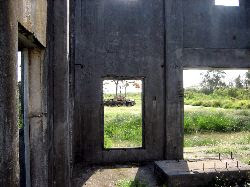
The Japanese As Lito Field power plant.



This bunker was originally Japanese. The 2,000 pound bombs used for the Japanese attack on Guam were stored here. After the Battle of Saipan, American bombs were stored here for the attack on Japan.

The original camouflage is still visible.

Notice the track on the roof used to move the bombs in and out of the bunker.

Several of these Japanese bunkers survived the battle and were put to use by the American military. Notice the 1944 sign painted on the side: "ISLEY FIELD BASE COMMAND" and below that possibly added after WWII: "TYPHOON SHELTER". Today these bunkers are still being used as government offices.


The Japanese As Lito Field power plant.
This bunker was originally Japanese. The 2,000 pound bombs used for the Japanese attack on Guam were stored here. After the Battle of Saipan, American bombs were stored here for the attack on Japan.
The original camouflage is still visible.
Notice the track on the roof used to move the bombs in and out of the bunker.
Several of these Japanese bunkers survived the battle and were put to use by the American military. Notice the 1944 sign painted on the side: "ISLEY FIELD BASE COMMAND" and below that possibly added after WWII: "TYPHOON SHELTER". Today these bunkers are still being used as government offices.